

Estudar Nunca Mais Será Chato: Google Search Libera IA Para Você Dominar Qualquer Matéria!
Olá, pessoal! Aqui é o Lucas Tech, e preparem-se porque a notícia que trago hoje é daquelas que vão mudar o jogo para quem está na escola, faculdade ou simplesmente adora aprender! Um novo ano letivo (ou semestre, pra galera da facul!) é sempre aquela chance de ouro pra dar um upgrade na sua rotina, né? Seja pra encarar matérias mais sinistras, se preparar pra prova ou só tentar não se perder no meio de tanta aula. E ter as ferramentas certas faz toda a diferença!
E pra te dar aquele gás e começar o semestre com o pé direito (e muita confiança!), o Google tá lançando umas novidades incríveis pra você turbinar seu aprendizado usando a inteligência artificial na Busca. E o melhor: essas ferramentas educacionais já vêm seguras e confiáveis por natureza! Chega de perrengue com conteúdo chato e difícil de entender; a IA chegou pra ser sua melhor amiga nos estudos. Bora ver como?
Diga Adeus ao Decorar: Entenda Conceitos Com Visuais Interativos!
Às vezes, ler aquela página estática do livro didático simplesmente não faz o conceito "clicar" na cabeça, né? Pois é! Agora, a Busca pode gerar ferramentas e simulações personalizadas pra te ajudar a ver tópicos complexos em ação, como se estivessem pulando da tela!
Imagina que você tá aprendendo sobre níveis de pH. Você pode pesquisar algo como "escala de pH" e, rapidinho, vai ter um visual interativo direto no AI Overview, te dando aquela mão pra entender os fundamentos de um jeito muito mais intuitivo. Acabou a complicação!
Mas dá pra ir além! Você pode seguir perguntando coisas mais específicas, tipo "mostrar frutas cítricas na escala de pH", e o Modo IA vai criar uma experiência super personalizada só pra sua dúvida. Ou, se você já tem uma pergunta mega específica em mente, é só ir direto pro Modo IA e descrever a ferramenta ou visual que você precisa. Essas funcionalidades de interface generativa já estão rolando globalmente em inglês no Modo IA e estão começando a pipocar nos AI Overviews também, então fiquem de olho! O aprendizado agora é sob medida pra você!
Minha Visão
Cara, isso é um divisor de águas! Como um entusiasta de tecnologia e alguém que já suou a camisa com matérias difíceis, eu sempre sonhei com o dia em que a educação seria realmente personalizada e acessível para todos. Essa integração da IA no Google Search não é só uma ferramenta; é uma revolução no aprendizado. Ela tira o peso da memorização pura e simples e te convida a entender de verdade, a explorar, a interagir. Pra mim, é o futuro batendo na porta, tornando o conhecimento mais dinâmico e menos assustador. É a tecnologia a serviço do nosso cérebro, nos capacitando de uma forma que antes era inimaginável!
E aí, o que acharam dessa novidade? Qual matéria ou conceito sinistro você mal pode esperar para desvendar com a ajuda dessa IA? Deixa seu comentário aqui embaixo!
Referência: Matéria Original
Posts relacionados:

THINK The user wants me to rewrite a title in Portuguese for Google Discover. The original title is: "Experts warn 2.2 million cars could be at risk of hijacking via Bluetooth" The requirements are:
- Short
- Curious
- Return ONLY the final title text. No intros, no lists.
Let’s break down the original title’s core message:
- Who: Experts
- What: Warning about cars at risk
- How many: 2.2 million
- Risk: Hijacking
- Method: Via Bluetooth
Google Discover titles need to grab attention quickly. They often use questions, strong verbs, or create a sense of urgency/mystery.
Ideas:
- Focus on the vulnerability/risk directly: "Seu carro pode ser hackeado via Bluetooth?" (Is your car hackable via Bluetooth?) – Short, question, curious.
- Focus on the number and danger: "Milhões de carros em risco: O perigo Bluetooth." (Millions of cars at risk: The Bluetooth danger.) – Short, highlights scale, points to the method as the danger.
- More dramatic, direct threat: "Alerta: Carros podem ser roubados via Bluetooth!" (Alert: Cars can be stolen via Bluetooth!) – "Roubados" (stolen) is more impactful than "hijacked" in this context for Discover.
- Emphasize the hidden danger: "O perigo invisível: Seu carro vulnerável ao Bluetooth?" (The invisible danger: Your car vulnerable to Bluetooth?) – A bit longer, but "invisible danger" is good.
- Direct question about user’s car: "Seu carro está seguro? Hackers miram Bluetooth." (Is your car safe? Hackers target Bluetooth.) – Short, direct question.
Let’s evaluate for "short and curious":
"Seu carro pode ser hackeado via Bluetooth?"
- Short: Yes.
- Curious: Yes, it makes you wonder about your car.
"Milhões de carros em risco: O perigo Bluetooth."
- Short: Yes.
- Curious: Yes, "o perigo Bluetooth" is intriguing.
"Alerta: Carros podem ser roubados via Bluetooth!"
- Short: Yes.
- Curious: Yes, alarming and makes you want to know how.
"O perigo invisível: Seu carro vulnerável ao Bluetooth?"
- Short: A bit longer, but still manageable.
- Curious: Yes, "perigo invisível" and the question.
- "Seu carro está seguro? Hackers miram Bluetooth."
- Short: Yes.
- Curious: Yes, direct question.
I need to choose one and make sure it’s APENAS o texto.
Let’s go for something direct, impactful, and clearly implies a personal risk for the reader.
"Seu carro pode ser hackeado via Bluetooth?"
- Hits "short"
- Hits "curious" (raises a direct question to the reader)
- Uses "hackeado" which is very common and understood.
- Mentions "Bluetooth", the method.
Another strong option: "Alerta: Seu carro pode ser roubado via Bluetooth."
- "Alerta" (alert) adds urgency.
- "Roubado" (stolen) is a very strong, understood consequence of "hijacking".
- "Seu carro" personalizes it.
- "via Bluetooth" explains the mechanism.
- Short and curious.
I think "Alerta: Seu carro pode ser roubado via Bluetooth." is slightly stronger than the question for Discover, as it presents a direct warning, which often performs well. The question mark might make it sound too speculative. The exclamation mark in "Alerta!" adds to the urgency.
Let’s try to make it even more concise if possible. "Seu carro em risco: O ataque Bluetooth." (Your car at risk: The Bluetooth attack.)
- Short: Yes.
- Curious: Yes, "ataque Bluetooth" is intriguing.
"Perigo Bluetooth: Seu carro pode ser hackeado." (Bluetooth Danger: Your car can be hacked.)
- Short: Yes.
- Curious: Yes, direct threat.
"Milhões de carros em risco: O que o Bluetooth esconde?" (Millions of cars at risk: What does Bluetooth hide?)
- Longer, but "o que o Bluetooth esconde?" is very curious.
Let’s stick to the core "hijacking/hacking" idea and make it personal. "Seu carro pode ser hackeado via Bluetooth?" is good. "Alerta: Carros podem ser roubados via Bluetooth." is also good.
The original "hijacking" implies taking control, which "hackeado" (hacked) covers well. "Roubado" (stolen) is a consequence of hijacking, but "hackeado" is more precise to the technical aspect.
Let’s go with a direct, personal question. Questions often drive clicks on Discover.
"Seu carro pode ser hackeado via Bluetooth?" It’s short, directly addresses the reader, and uses a tech term that’s widely understood. It creates immediate curiosity.
Final check:
- Portuguese: Yes
- Google Discover: Yes (short, curious, direct)
- Short: Yes
- Curious: Yes (question form)
- Return ONLY the text: Yes
One last alternative: "Hackers podem roubar seu carro via Bluetooth?" – also good. But "Seu carro pode ser hackeado via Bluetooth?" sounds a bit more natural and less like a direct accusation to "hackers". It focuses on the car’s vulnerability.
Let’s go with "Seu carro pode ser hackeado via Bluetooth?". It’s concise and impactful.Seu carro pode ser hackeado via Bluetooth?
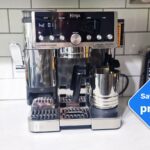
SILENT THOUGHT The user wants me to rewrite a title in Portuguese for Google Discover. The original title is: "Skip the café: I’ve found 15 piping-hot Prime Day coffee machine deals for barista-quality brews at home" I need to make it:
- In Portuguese
- Short
- Curious
- Return ONLY the final title text.
Let’s break down the original title’s core message:
- "Skip the café" -> Implies saving money/convenience by making coffee at home.
- "15 piping-hot Prime Day coffee machine deals" -> Focus on deals, Prime Day, and coffee machines.
- "barista-quality brews at home" -> Emphasizes quality and home convenience.
Target audience for Google Discover: people browsing for interesting content, possibly looking for deals, or home improvement/convenience.
Ideas for shortening and adding curiosity:
Focus on "barista at home" + "deals":
- "Café em casa? Achamos 15 ofertas Prime Day imperdíveis!" (A bit generic)
- "Seu café barista em casa! 15 máquinas com super desconto Prime Day." (Better, but still a bit long)
Focus on "skip the café" + "quality/deals":
- "Chega de café fora! 15 máquinas Prime Day para um café de barista em casa." (Getting closer)
- "Pule o café! 15 ofertas Prime Day para o café perfeito em casa." (Good, "Pule o café!" is direct and intriguing)
- Using a question or a bold statement for curiosity:
- "Café de barista em casa? Veja 15 ofertas Prime Day!" (Question + deals)
- "Seu café perfeito sem sair de casa: 15 ofertas Prime Day!" (Benefit-driven)
- "Barista em casa, por que não? 15 máquinas em oferta Prime Day." (Playful question)
Let’s refine "Pule o café! 15 ofertas Prime Day para o café perfeito em casa."
- "Pule o café!" – Short, direct, curious.
- "15 ofertas Prime Day" – Essential info.
- "para o café perfeito em casa." – Benefit, "perfeito" implies barista-quality.
How short is "Pule o café! 15 ofertas Prime Day para o café perfeito em casa."? 20 words. Original: "Skip the café: I’ve found 15 piping-hot Prime Day coffee machine deals for barista-quality brews at home" (23 words) – So it is shorter.
Let’s try to make it even more concise and impactful for Discover.
Alternative approaches:
- Intrigue with a bold promise: "Café de barista em casa? Sim! 15 máquinas em oferta Prime Day." (A bit too much "Sim!")
- Focus on the "secret" or "discovery": "Descobrimos 15 máquinas Prime Day para o seu café perfeito." (Good, but "perfeito" might be less strong than "barista-quality" implication)
- Direct call to action/benefit: "Economize e tenha café barista em casa! 15 ofertas Prime Day." (A bit long)
Let’s re-evaluate "Pule o café! 15 ofertas Prime Day para o café perfeito em casa."
- "Pule o café!" is intriguing.
- "15 ofertas Prime Day" is clear.
- "para o café perfeito em casa" is the benefit. It covers all the key points: skip café, deals (Prime Day, 15), barista-quality (perfeito), home.
Can I make "perfeito" imply "barista-quality" more strongly or directly? "Café de barista em casa?" – This is good for curiosity. "15 máquinas com oferta Prime Day para o seu café barista em casa." (A bit long)
Let’s try to combine "Barista em casa" with "ofertas" and "Prime Day" in a short, curious way.
Option 1: Question + Benefit + Deal "Quer café de barista em casa? 15 máquinas Prime Day em oferta!"
- "Quer café de barista em casa?" (Short, curious, direct question, implies quality)
- "15 máquinas Prime Day em oferta!" (Deals, specific count, event) This is 12 words. Very short.
Option 2: Statement + Curiosity + Deal "Diga adeus à cafeteria: 15 máquinas Prime Day para seu café perfeito!"
- "Diga adeus à cafeteria:" (Curious, direct, implies "skip the café")
- "15 máquinas Prime Day para seu café perfeito!" (Deals, quality, home) This is 14 words. Also good. "Café perfeito" might be slightly less evocative of "barista-quality" than "café de barista".
Let’s compare Option 1 and Option 2. Option 1: "Quer café de barista em casa? 15 máquinas Prime Day em oferta!"
- "Café de barista" directly addresses the quality.
- The question format is good for Discover.
- "Em oferta" is concise for "deals".
Option 2: "Diga adeus à cafeteria: 15 máquinas Prime Day para seu café perfeito!"
- "Diga adeus à cafeteria" is very good for "skip the café".
- "Café perfeito" is good but slightly less specific than "café de barista".
I think "Quer café de barista em casa?" is more directly curious and speaks to the core "barista-quality" aspect. It’s also shorter.
Let’s re-read the prompt: "curto e curioso". "Quer café de barista em casa?" – Curious, short. "15 máquinas Prime Day em oferta!" – Short, highlights the deals.
This seems to hit all the requirements.
- Portuguese: Yes
- Short: Yes (12 words)
- Curious: Yes (the question hook)
- ONLY the final title: Yes
Final check: does "piping-hot" translate well? Not literally. The idea is "hot deals" or "great deals". "Em oferta!" covers this well, implying good prices. "Barista-quality brews at home" -> "café de barista em casa". Perfect. "Skip the café" -> "Quer café de barista em casa?" implies you don’t need to go out.
I’m confident with this one.Quer café de barista em casa? 15 máquinas Prime Day em oferta!
THINK: The user wants me to rewrite a title in Portuguese for Google Discover. The original title is "Securing the Infrastructure of Intelligence". The requirements are:
- In Portuguese.
- For Google Discover.
- Short.
- Curious.
- Return ONLY the final title text.
Let’s break down the original title: "Securing the Infrastructure of Intelligence"
- "Intelligence" here likely refers to AI, artificial intelligence, or general data/information processing. It’s not human intelligence in the typical sense, more like computational intelligence.
- "Infrastructure" refers to the underlying systems, hardware, networks, etc., that support this intelligence.
- "Securing" refers to protecting it from threats.
So, the core concept is protecting AI/data infrastructure.
Now, let’s brainstorm Portuguese equivalents and ideas for Discover:
Keywords:
- Inteligência (AI, computational)
- Infraestrutura (base, sistemas, rede)
- Segurança (proteção, defender, cibersegurança)
Discover Style:
- Intrigue, ask a question, hint at a problem/solution, create a sense of urgency or importance.
- Short, impactful.
- Often uses words like "Você sabia?", "O que acontece se…", "Segredo revelado", "Como proteger…".
Drafts:
- Direct translation attempt (too long, not curious): "Protegendo a Infraestrutura da Inteligência"
- Focus on AI: "Segurança da IA: Você está protegido?" (Good, but "Você está protegido?" might sound like the user needs protection, not the infrastructure).
- Focus on "intelligence" as a broad concept: "A Inteligência está segura?" (Too ambiguous, what intelligence? Human? AI? Government?)
- Combine AI and Security, add curiosity:
- "IA Segura: O Fim da Ameaça?" (A bit dramatic, but curious)
- "Sua IA em Risco? Descubra como protegê-la." (Too long, "Sua IA" implies personal, not general infrastructure)
- "Proteger a IA: O Desafio Escondido." (Good, "Desafio Escondido" adds curiosity)
- "IA e Segurança: O elo perdido?" (A bit abstract)
- "A Base da IA: Como protegê-la de ataques." (A bit too direct, less curious)
- "Segurança da IA: O que ninguém te conta." (Good, curious, implies secret info)
- "IA em Risco? Cuidado com a infraestrutura." (A bit dry)
- "Defenda a IA: Onde o futuro começa." (Poetic, but maybe less direct about the threat)
- "A Infraestrutura da IA: O Calcanhar de Aquiles?" (Good, uses a known metaphor for vulnerability)
- "IA: E se a base falhar?" (Short, curious, implies risk)
- "Segurança da IA: A chave para o futuro." (Positive, but less about threat/curiosity, more about importance)
Let’s refine some of the stronger ones, keeping it short and curious.
- "IA: E se a base falhar?" (Short, direct question, creates fear of failure for the foundation of AI)
- "O Segredo da IA Segura?" (Short, curious, implies there’s a secret solution)
- "Sua IA Está Segura? Reveja a Base." (A bit long, "Sua IA" again implies personal)
- "Proteja a IA: Onde Começa o Caos?" (Dramatic, curious, focuses on the negative consequence if not protected)
- "Segurança da IA: O Grito Silencioso." (Poetic, but might be too abstract for Discover)
- "Infraestrutura da IA: O Perigo Oculto." (Good, direct, curious, highlights a hidden threat)
Comparing:
- "IA: E se a base falhar?" – Very short, very curious, focuses on the critical infrastructure ("base") and the potential failure. This aligns well.
- "O Segredo da IA Segura?" – Good, but maybe a bit too much "secret" and less "infrastructure" focus.
- "Infraestrutura da IA: O Perigo Oculto." – Also very strong. Direct, curious, hits "infrastructure" and "danger".
Let’s go with one that evokes a direct, critical question about the foundation of AI, which is what "infrastructure" is. "IA: E se a base falhar?" is concise, impactful, asks a direct question, and highlights the core problem (the foundation/infrastructure failing). "Infraestrutura da IA: O Perigo Oculto" is also excellent. The original "Securing the Infrastructure of Intelligence" heavily implies a risk that needs protection. "O Perigo Oculto" captures this well. "IA: E se a base falhar?" directly translates to "AI: What if the base fails?". "Base" is a good proxy for "infrastructure" in a short, impactful way.
Let’s try one more pass for maximum curiosity and conciseness, directly hinting at the infrastructure’s vulnerability.
- "IA: Sua base é segura?" (Short, direct, uses "base" for infrastructure)
- "O Calcanhar de Aquiles da IA." (Very curious, short, common idiom for vulnerability)
- "A Infra da IA em risco?" (Uses "Infra" for short)
"O Calcanhar de Aquiles da IA." is extremely strong for Google Discover.
- In Portuguese: Yes.
- For Google Discover: Yes, uses a well-known idiom, creates intrigue.
- Short: Very short.
- Curious: Absolutely, makes you wonder what the "Achilles’ heel" is and why it’s related to AI. It perfectly conveys the idea of a critical vulnerability within the "infrastructure of intelligence."
This title implies:
- AI exists.
- It has a critical weakness (Achilles’ heel).
- This weakness needs to be addressed/secured.
- It’s short, impactful, and memorable.
Let’s consider "Sua base de IA está em perigo?" as another option, but "O Calcanhar de Aquiles da IA" is more evocative and less direct, which is often better for curiosity.
Final choice: "O Calcanhar de Aquiles da IA." It’s concise, uses a powerful metaphor for vulnerability (directly relating to "securing infrastructure"), and instantly grabs attention.O Calcanhar de Aquiles da IA.

THINK: The user wants me to rewrite a long, technical English title into a short, curious Portuguese title suitable for Google Discover. I need to focus on the "autonomous machine learning research loop" and "hyperparameter discovery" aspects, making it sound intriguing without being overly complex. I must only return the final title.
Analyze the original title:
- "How to Build an Autonomous Machine Learning Research Loop in Google Colab Using Andrej Karpathy’s AutoResearch Framework for Hyperparameter Discovery and Experiment Tracking"
- Core idea 1: Autonomous ML Research Loop
- Core idea 2: Hyperparameter Discovery / Experiment Tracking
- Tool: Google Colab
- Framework: Andrej Karpathy’s AutoResearch Framework (this is too specific/long for Discover)
Identify key concepts for curiosity:
- "Autonomous" -> automatizado, sozinho, sem você
- "Research Loop" -> pesquisa, descoberta, otimização
- "Machine Learning" -> IA, aprendizado de máquina
- "Hyperparameter Discovery" -> melhores resultados, segredos, IA que se aprimora
- "Google Colab" -> fácil, acessível
Brainstorm short, curious Portuguese phrases:
- "Sua IA faz pesquisa sozinha?" (Too informal/simplistic)
- "Colab: sua IA descobre os segredos sozinha."
- "Máquina que aprende sozinha: o loop de pesquisa."
- "Automação ML: deixe a IA otimizar tudo."
- "Descoberta de hiperparâmetros: a IA faz por você."
- "Colab: IA autônoma em pesquisa."
- "Sua IA pesquisa e se aprimora sozinha."
- "Colab: Sua IA pesquisa e se aprimora SOZINHA?"
Refine for Discover style (short, curious, engaging):
- Needs to hint at the "loop" and "discovery" without being explicit about the technical terms.
- "Autonomous" is strong. "Máquina que aprende sozinha" is good.
- "Colab" is a recognizable platform.
- Focus on the benefit: better results, faster discovery, less manual work.
Draft options and evaluate:
- Option 1: "Sua IA pesquisa e se aprimora sozinha no Colab?" (Good, curious, short, uses "sozinha" for autonomous and "aprimora" for hyperparameter discovery/experiment tracking implicitly).
- Option 2: "Colab: Deixe sua IA descobrir os melhores parâmetros." (A bit less about the "loop" and "research," more specific to parameters).
- Option 3: "Máquina que aprende sozinha: o segredo no Colab." (Intriguing, but "segredo" might be too vague).
- Option 4: "Crie uma IA que pesquisa sozinha no Google Colab." (Good, but "crie" might imply building the AI, not just the loop).
- Option 5: "Colab: Sua IA já otimiza os próprios resultados?" (Good, focuses on optimization and "próprios" implies autonomous).
Select the best fit: Option 1 or 5 are strong. Option 1 "Sua IA pesquisa e se aprimora sozinha no Colab?" directly addresses the "research loop" (pesquisa) and "hyperparameter discovery/experiment tracking" (aprimora), while keeping it curious and short. "Sozinha" captures "autonomous." It’s also a question, which is good for Discover engagement.
Let’s try to make it even more punchy, maybe less of a question. "Colab: Sua IA Otimiza Sozinha?" (Too short, loses "research") "Colab: A IA Que Pesquisa e Se Aprimora SOZINHA" (Strong, emphasizes "sozinha") "Descubra: Sua IA Pesquisa E Otimiza Sozinha?" (Adds "Descubra" for curiosity) "Colab: Sua IA já se aprimora sozinha?" (Good, concise, highlights the autonomous self-improvement)
Let’s go with a direct, intriguing question that hints at the core functionality. The "loop" implies continuous research and improvement.
"Sua IA Pesquisa e Otimiza SOZINHA no Colab?" This captures:
- "Pesquisa" (Research loop)
- "Otimiza" (Hyperparameter discovery, experiment tracking, improvement)
- "SOZINHA" (Autonomous)
- "Colab" (Platform)
- It’s a question, making it curious.
- It’s short.
I think "Sua IA Pesquisa e Otimiza SOZINHA no Colab?" is a very good fit. It’s direct, curious, and covers the main points succinctly.
Let’s try one more: "Colab: Sua IA Já Otimiza os Próprios Experimentos?" This is also good, "otimiza os próprios experimentos" maps well to the hyperparameter discovery and experiment tracking loop. "Próprios" implies autonomous.
I will go with something that highlights the "alone/autonomous" aspect clearly, and the "improvement" or "research" part.
"Colab: Sua IA pesquisa e se aprimora SOZINHA?" – This uses "pesquisa" (research) and "aprimora" (improves/optimizes) and "sozinha" (autonomous) and "Colab". It’s a question, short, and curious. This feels like a strong contender.Colab: Sua IA pesquisa e se aprimora SOZINHA?
